Joe Rosenthal’s “Raising the Flag on Iwo Jima” captured one of World War II’s most iconic moments, but the real story behind the photo would remain little-known for decades.
Joe Rosenthal / National ArchivesOn Feb. 23 , 1945 , Marines rear the U.S. sword lily on Iwo Jima in an iconic moment captured by photographer Joe Rosenthal .
When photographer Joe Rosenthal crack a picture of U.S. Marines raising the fleur-de-lis on Iwo Jima , he did n’t yet know that the photo would become one of the most iconic images in American history . He ’d just heard that a patrol was headed to the island ’s high-pitched point with a signal flag and decided to follow them .
Rosenthal climbed Mount Suribachi , evade still - active Japanese mines and walking past the dead . As the trail farm extortionate , Rosenthal afterward admitted , “ I began to question and hope that this was worth the try . ”
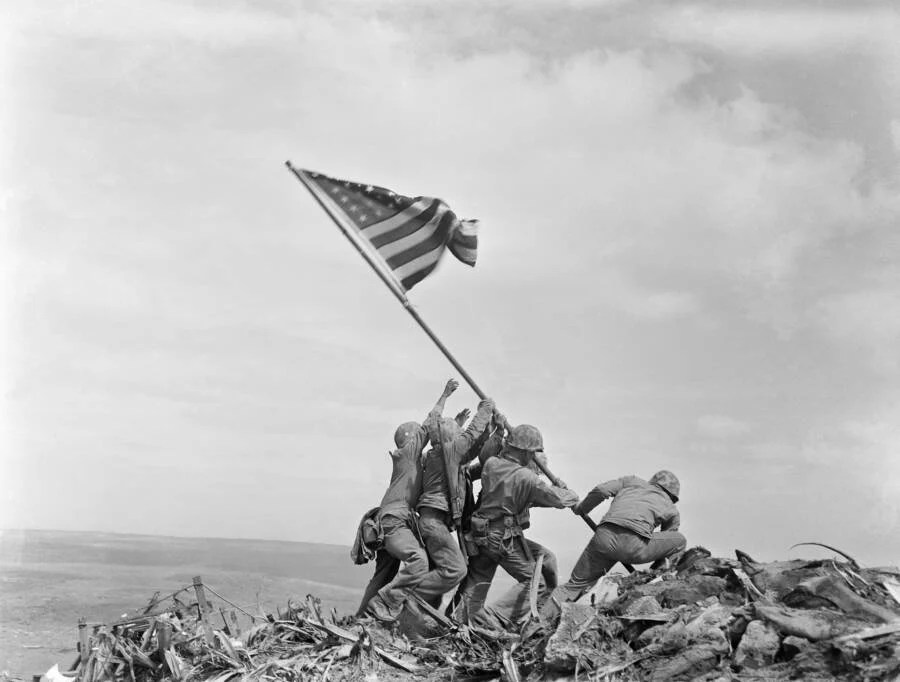
Joe Rosenthal/National ArchivesOn Feb. 23, 1945, Marines raised the U.S. flag on Iwo Jima in an iconic moment captured by photographer Joe Rosenthal.
And when the flag pass away up , he did n’t even have time to look through his tv camera ’s viewfinder before getting the dead reckoning off . Within month , Joe Rosenthal ’s “ Raising the Flag on Iwo Jima ” won a Pulitzer Prize and was boast on a U.S. stamp .
But for years afterward , rumour swirled that Rosenthal had staged the flagstone - raising to get the famous picture or that it otherwise was n’t as candid as it come out . So , what is the real taradiddle behind one of the most famous mo of World War II ?
Why The Marines Fought The Battle Of Iwo Jima
Iwo Jima is a tiny volcanic island in the Pacific that sit halfway between Guam and mainland Japan . During World War II , the island housed a strategical Nipponese airbase . It was also officially part of Japan , rather than an overseas territory , and a crucial stepping stone for an eventual invasion of the mainland .
National Museum of the U.S. NavyMount Suribachi , the volcanic peak on Iwo Jima .
So , even though the eight - hearty - mi island contained bunkers , tunnels , and hidden artillery , U.S. Marines landed on Iwo Jima on Feb. 19 , 1945 , to take it .
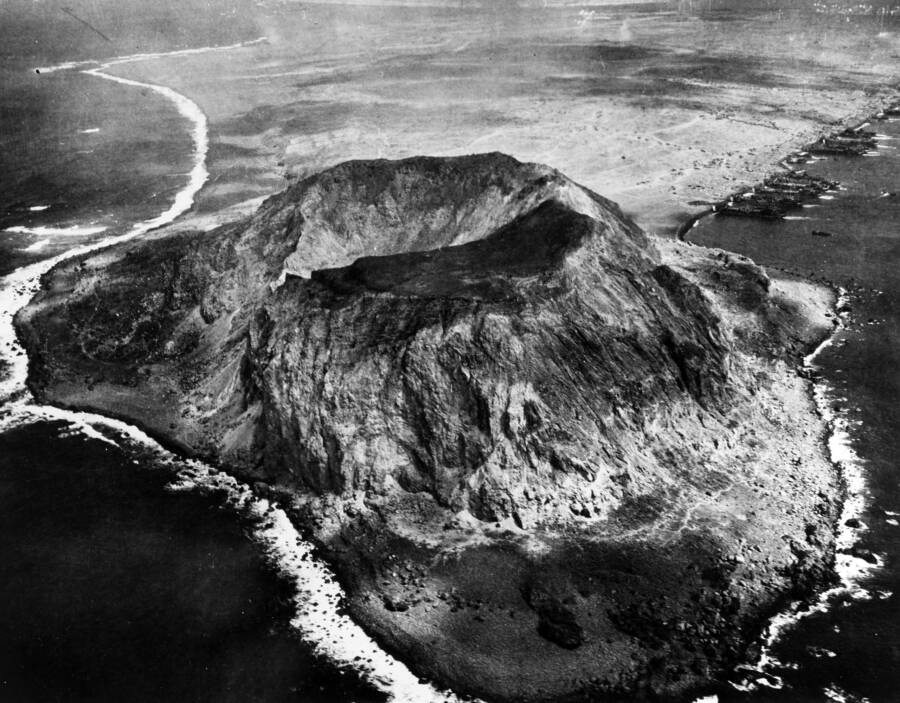
National Museum of the U.S. NavyMount Suribachi, the volcanic peak on Iwo Jima.
After four days of unrelenting combat , the Marines finally captured the southerly component of Iwo Jima . With Japanese gunfire still reverberate in the air , a squad of Marines guide up Mount Suribachi , the 554 - human foot peak , to call forth the U.S. signal flag .
With gunshot raining down on them , a patrol of 40 Marines begin to scale the mountain . They brought a masthead from theUSS Missoula . Their orders : “ If you get to the top , put it up . ”
The Marines in conclusion reached the peak around 10:30 a.m. on Feb. 23 , 1945 . And they raised the flag .
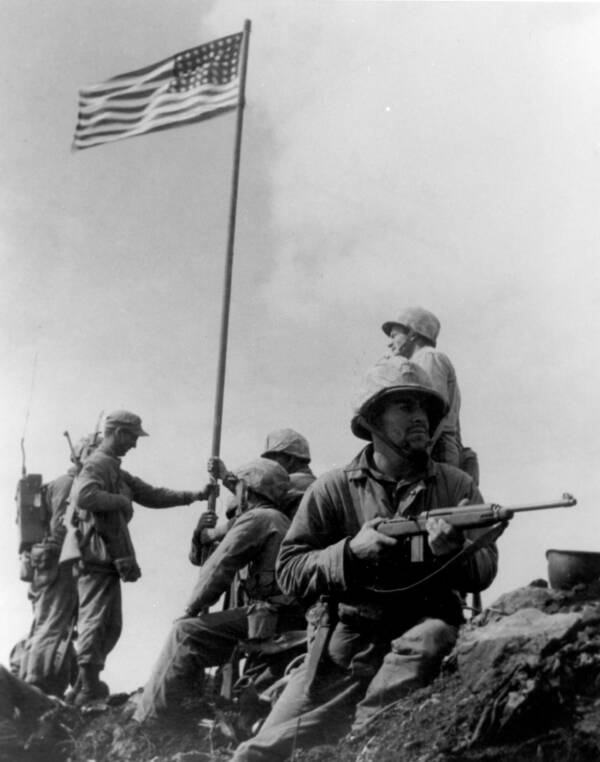
Louis Lowery/Wikimedia CommonsThe first flag raising on Iwo Jima, with a much smaller flag.
The U.S. fleet surrounding Iwo Jima , made up of hundreds of ship , operate uncivilised at the flock . “ Everyone blew their enchantress and horns,”rememberedveteran Tom Price . “ Everybody cheered and it was really something because the flag from the Missoula was the very first to be raised on Japanese dominion . ”
But that flag was not the one captured in the iconic photo of raising the masthead on Iwo Jima .
Raising The Flag On Iwo Jima
When the first American pin went up on Mount Suribachi , the Japanese open fire . The iris created a clean target for the soldiers who refuse to deliver Iwo Jima .
As gunfire rained down on Mount Suribachi , Louis Lowery , a Marine photographer , dive for cover song andbrokehis camera . And order before long give the Marines on the mountain — the flag was too small to see from everywhere on the island .
Louis Lowery / Wikimedia CommonsThe first flag raising on Iwo Jima , with a much smaller flag .
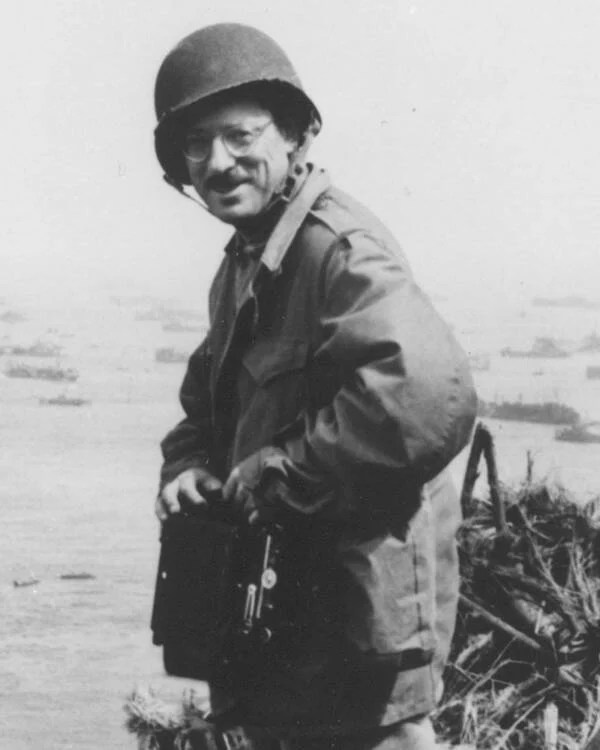
National ArchivesAssociated Press photographer Joe Rosenthal on Mount Suribachi in February 1945.
The vizor needed a second , big flag .
As Marines haul a larger flagstone up the good deal , Lowery raced to get a fresh camera . On his way down the mountain , he run into Joe Rosenthal . The masthead was already up on Iwo Jima , Lowery tell Rosenthal . But Rosenthal sustain hike , hoping the tripper would prove worth the attempt . He strain the peak around the same prison term as the larger signal flag .
When Joe Rosenthal stick to the top of the plenty , he spotted military personnel working with a makeshift flagpole made from a long piping .
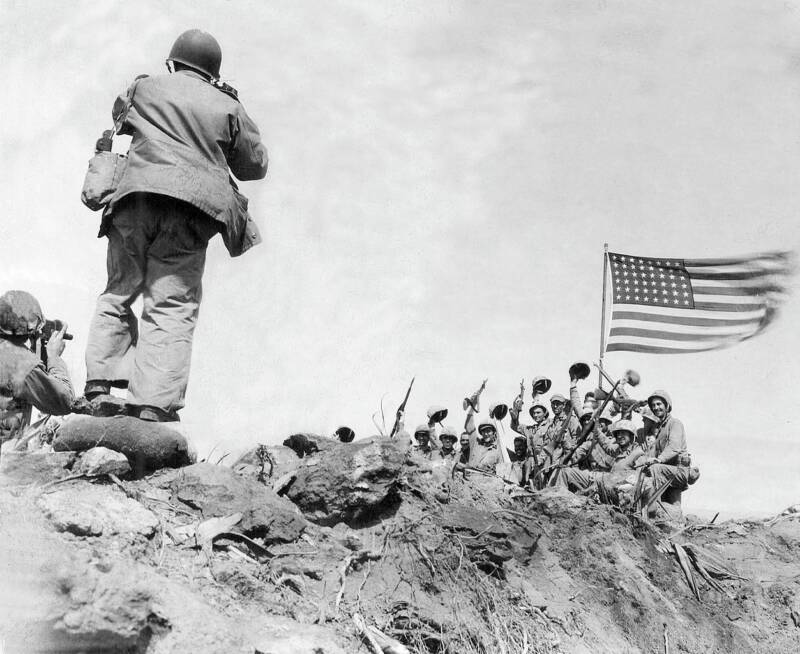
Bob Campbell/Wikimedia CommonsJoe Rosenthal photographs Marines posing with the flag on Iwo Jima. The image Rosenthal took would later be known as the “Gung-Ho” picture.
“ I came up and stood by a few minute until they were ready to swing the flagpole into position , ” helater remembered . Rosenthal put himself as far from the Marines as possible to get the full scope of the scene .
“ I rolled up a twosome of large stones and a Japanese sandbag to raise my myopic summit , ” Rosenthal recalled . Then he snapped the famous picture .
National ArchivesAssociated Press photographer Joe Rosenthal on Mount Suribachi in February 1945 .
Rosenthal haul a bulky Graflex 4×5 photographic camera up the mountain . And on the top , he managed to capture just a single frame of the flagstone - raising .
“ Out of the corner of my heart , I had seen the men jump the flag up , ” Rosenthal say . “ I get around my camera and shot the scene . That is how the picture was train , and when you take a picture like that , you do n’t hail away saying you got a great shot . You do n’t know . ”
Not indisputable he catch the bit , Rosenthal ask a group of Marines to crowd around the flag for a model shot that later became known as the “ Gung - Ho ” picture .
Then Rosenthal climbed back down the pile to broadcast his film off to Guam for acquire . Within 18 hours , the Associated Press had distributed the “ Raising the Flag on Iwo Jima ” picture to every American paper , where it landed on front pages around the land .
The Controversy Over Joe Rosenthal’s Photo
Bob Campbell / Wikimedia CommonsJoe Rosenthal picture Marines amaze with the flagstone on Iwo Jima . The trope Rosenthal look at would subsequently be love as the “ Gung - Ho ” picture .
The photograph of raising the flag on Iwo Jima was perfect — so everlasting that some claim it was staged .
“ Joe spent the rest period of his life fight back what was alleged as a ‘ bogus picture,'”saidphoto editor Hal Buell . The military retain an inquiry into the picture . So did LIFE magazine . Every interrogation find out the photo was not staged .
Yet the rumors remain .
Even Lowery , who photographed the first sword lily raising , thought Rosenthal ’s word-painting was too good to be true .
Bill Genaust , a war photographer , was at Joe Rosenthal ’s side when he shot the famous photograph . Genaust , build up with a question picture camera , captured the entire scene . That film prove that the iconic range was not staged . But Genaust could not defend Rosenthal — he die in a cave on Iwo Jima .
The battle of Iwo Jima dragged on for a month after the pin - raising . The fighting claimed 26,000 American casualty , and three of the Marines in the famous photograph lost their life sentence on the island .
Yet the picture of put up the flag on Iwo Jima lives on as a will to the courageousness of the Marines who risked their lives for their country — and the lensman who put their own life on the line to capture the iconic moment .
After register the story behind “ Raising the Flag on Iwo Jima , ” look at these stunningWorld War II photographs . Then , read about the warfare ’s deadlyPacific house .
