The animal bone tools, the oldest ever discovered, were likely used to remove meat from the carcasses of creatures like hippos and elephants.
CSICOne of the bone tools , which shows signs of being excise to create a sharpened sharpness .
Archaeologists have long believed that humans did n’t take up craft tools from osseous tissue until between 250,000 and 500,000 years ago . However , a 2018 excavation in Tanzania ’s Olduvai Gorge turned up a cache of creature bone tools that have now been determined to be 1.5 million year old , press back the hominin tool applied science timeline by more than one million year .
Made from elephant and hippo osseous tissue , the tools show distinct signs of being purposefully carve . This suggest that former humans had “ more complex knowledge ” than experts believed and that they were capable of transferring their shaft - making accomplishment from Harlan F. Stone to bones originally than previously recognise .
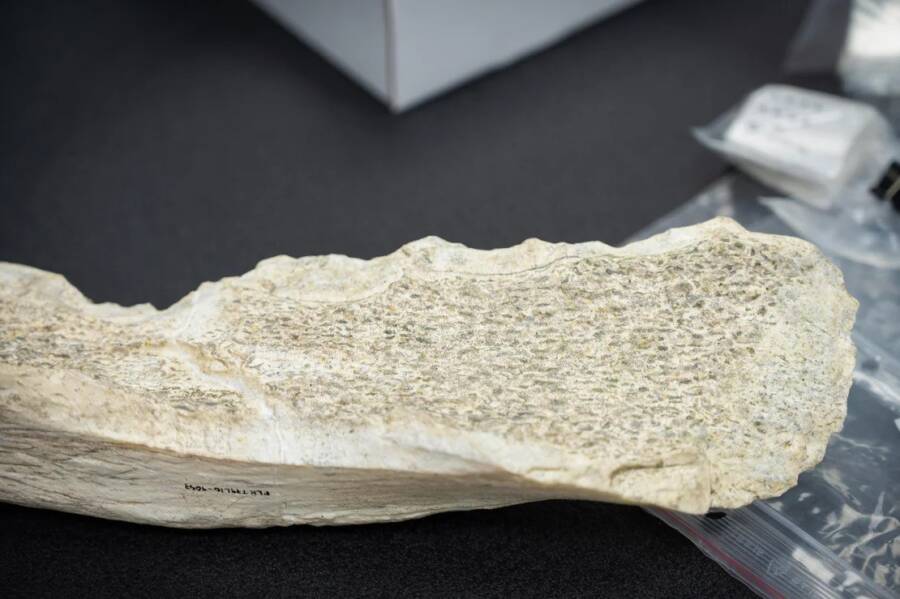
CSICOne of the bone tools, which shows signs of being struck in order to create a sharpened edge.
Discovering The Animal Bone Tools At Olduvai Gorge In Tanzania
The find of the fauna bone tools , as distinguish ina new survey published inNature , took place in 2018 at Tanzania ’s Olduvai Gorge .
CSICStudy track Ignacio de la Torre sustain one of the off-white pecker discovered in Tanzania .
At the site — where some of the earliest stone cock made by early hominins have also been find — researchers came across a rich cache of 27 cut up and sharpen animal bones . The bones came from elephant and hippos , with the orotund elephant bone tools quantify up to 16 inch long and the slimly small hippo bone cock reaching lengths of 12 in .
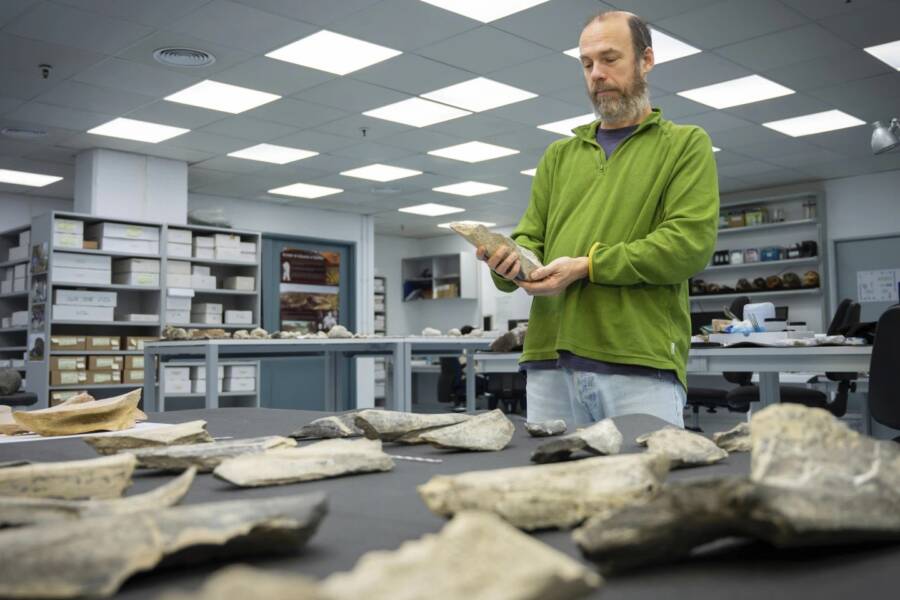
CSICStudy lead Ignacio de la Torre holding one of the bone tools discovered in Tanzania.
The bones show considerable signboard of habiliment . researcher say that prehistorical humans chipped away little flakes to make a sharp edge , standardised to how former humans made peter out of stones ( a process that is much older , with the earliest roll in the hay stone tools dating back 3.3 million years ) . This “ knapping ” process allowed them to shape the bones into bridge player tools .
CSICThe bone instrument tell a news report about other humanity and their power to craft tools .
“ The tools show grounds that their creators carefully worked the bones , chipping off flakes to produce utile shapes , ” study carbon monoxide gas - author Renata F. Peters of the University College London ’s Institute of Archaeologyexplained in a command . “ We were excited to feel these bone cock from such an early timeframe . It means that human root were capable of transferring skills from stone to bone , a level of complex knowledge that we have n’t seen elsewhere for another million years . ”
CSICThe bone tools tell a story about early humans and their ability to craft tools.
So , how did other humans apply these cock ? And who on the dot made them ?
How Prehistoric People Used Animal Bone Tools
The early human race who craft these shaft were purposeful in the bones they select — large , hardy single from specific animals like elephants and hippos — and how they carved them . By carefully knap the brute bones , they make prick that had one heighten edge and one pointed baksheesh . The piece of work on the bones is so deliberate that it ’s clear that the pearl were purposefully cut up and not shaped through innate processes .
However , researchers do n’t believe that early human race made these bone tools for hunting . Rather , they were likely used for scavenging and slice off chunks of sum from elephant and hippo carcasses .
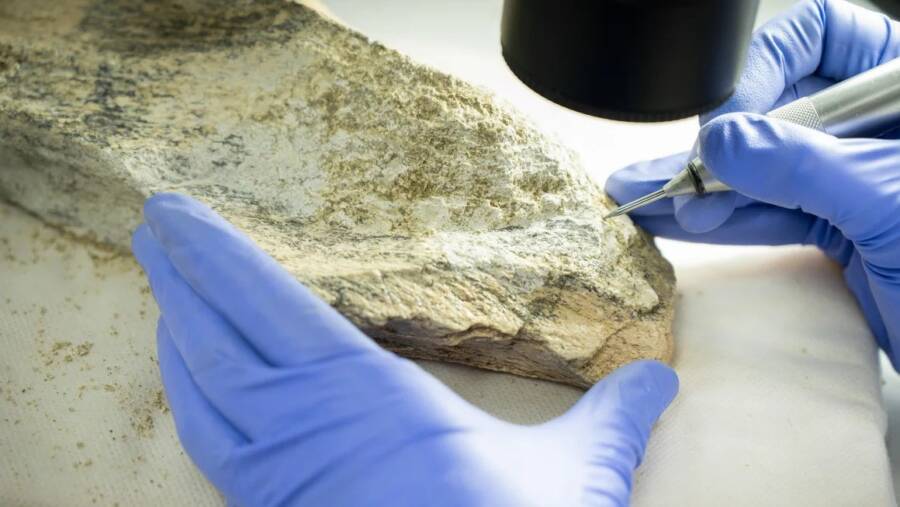
CSICCSIC conservator Ana Seisdedo cover the ivory pecker .

CSICCSIC conservator Ana Seisdedo handling the bone tools.
scientist still are n’t 100 percent sure who exactly made the tools . archaeologist have previously found grounds of the homininsHomo habilis , Homo erectus , andParanthropus boiseinear the Olduvai Gorge site at various points throughout chronicle . So far , the researcher have been ineffectual to connect the bone tools with any particular group .
In the end , the uncovering of bone shaft at Olduvai Gorge has exciting implications for the study of prehistory . It suggests that early humans were capable of carving bones much earlier than previously thought , which , in turn , suggests that they had potent cognitive capability .
“ This uncovering leads us to take that former humans significantly expanded their technical selection , which until then were circumscribe to the output of stone puppet and now allowed unexampled raw materials to be incorporate into the repertoire of possible artifact , ” field steer source Ignacio de la Torre of the CSIC - Spanish National Research Council read in the assertion .
He continued : “ At the same time , this expansion of technological voltage indicate overture in the cognitive abilities and mental structures of these hominins , who experience how to contain expert foundation by conform their knowledge of stone piece of work to the handling of off-white rest . ”
After learn about the hoard of 1.5 - million - class - old animal os tools uncovered in Tanzania , discover the narration of theNeanderthals , human race ’s prehistorical relative . Or , look through these fascinatingreconstructions of ancient peoples ’ face .
