Golden eagles, mountain goats, black bears, and more have thrived in the uninhabited Korean DMZ for the past 70 years.
National Institute of Ecology / Google Arts & CultureCameras in the Korean DMZ conquer an Asian ignominious bear for the first time in two decades .
The 160 - nautical mile stretch between North and South Korea bonk as the demilitarized zone ( DMZ ) is mostly off - terminal point for people . But in the absence seizure of humans , all kinds of wildlife have thrived . To mark the 70th anniversary of the Korean War armistice , Google has let go of rare image of the DMZ ’s wildlife , ranging from mountain goats to pitch-black bear .
“ After the Korean War , the DMZ had minimum human encumbrance for over 70 year , and the damage nature recovered on its own,”Google Arts and Cultureexplained . “ As a result , it built up a new ecosystem not seen around the cities and has become a sanctuary for wildlife . ”
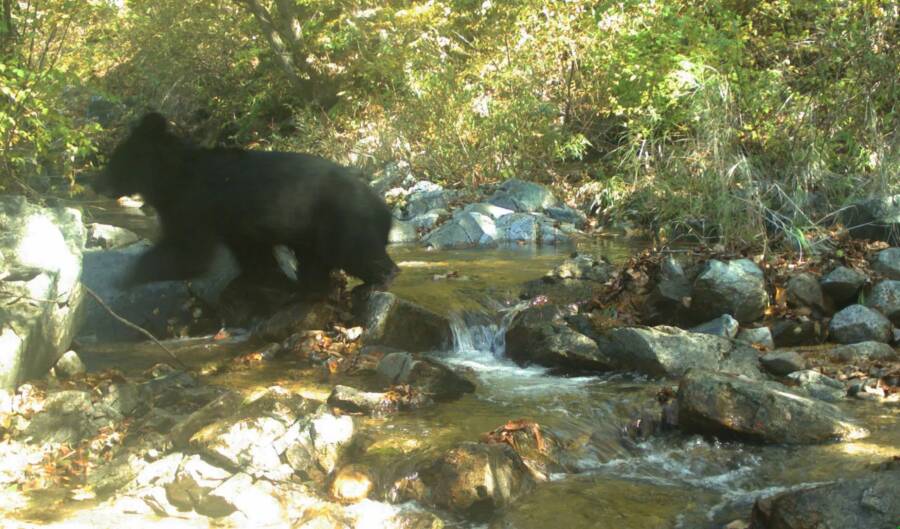
National Institute of Ecology / Google Arts & CultureCameras in the Korean DMZ captured an Asiatic black bear for the first time in two decades.
Animals found in the DMZ include cranes , cervid , trout , wildcat well , and more . According to Google Arts and Culture , the zone contains 6,168 species , admit 38 percent of Korean mintage that are considered endangered .
One of those species is the rare Asiatic inglorious bear , which was captured on photographic camera in the DMZ after elude perceiver for twenty year . Another is the endangered musk cervid , which miss horns but has fangs in its upper jaw .
National Institute of Ecology / Google Arts & CultureThe threaten musk deer calls the Korean DMZ home .
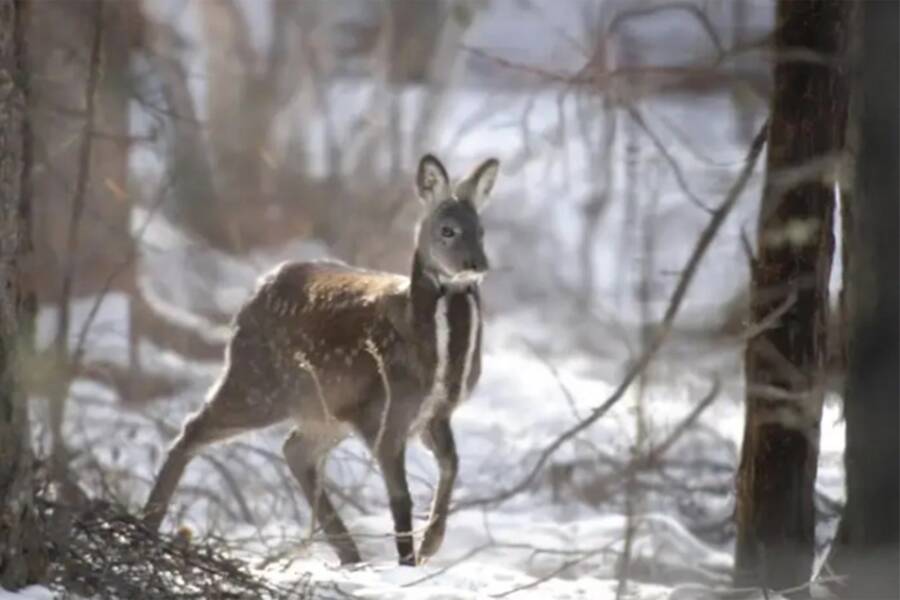
National Institute of Ecology / Google Arts & CultureThe endangered musk deer calls the Korean DMZ home.
The creatures have been thriving in the buffer zone between South and North Korea , which includes home ground ranging from grassy moor and river defile to rocky deal and tidal swamps . Though fences and land mines keep most people away , animals have thrive in the DMZ ’s lush landscape since the Korean War ended in 1953 .
“ Have you wonder what the Han River , which now cut through the pith of Seoul , might have looked like in its lifelike DoS 100 years ago ? ” Seo Jae - chul , an expert adviser at Green Korea United , allege , according toLondon ’s Natural History Museum . “ you’re able to see it at the DMZ , through the natural river Sir Joseph Banks and streams that are there . ”
National Institute of Ecology / Google Arts & CultureA wildcat in the Korean DMZ caught on a Nox - sight camera .
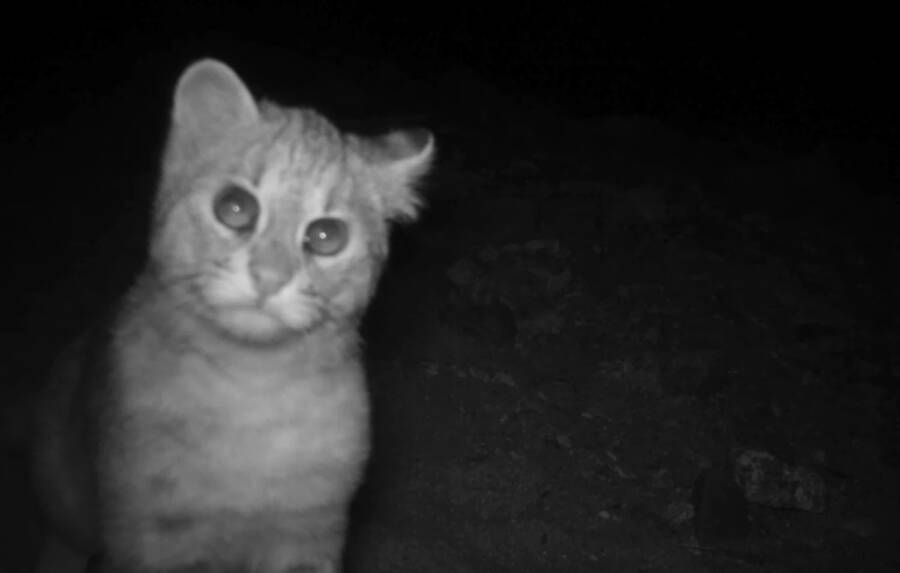
National Institute of Ecology / Google Arts & CultureA wildcat in the Korean DMZ caught on a night-vision camera.
The DMZ was create in 1953 at the close of the Korean War , which importantly ended with an cease-fire and not a repose muckle . That mean that the war between North and South Korea is technically still ongoing , and the DMZ work as a buffer zone between the two land .
The demilitarized geographical zone covers an area about twice the size of New York City , as the Natural History Museum note . But though animals are thrive within the zone , conservation efforts have been hindered by the enduring tension between the two countries .
AsNBCreports , North and South Korea engage in repose talks in 2018 that ecologists hoped would precede to a communion of conservation responsibilities , and South Korea even open a turn of “ public security trails ” along the southerly mete of the DMZ in 2019 .
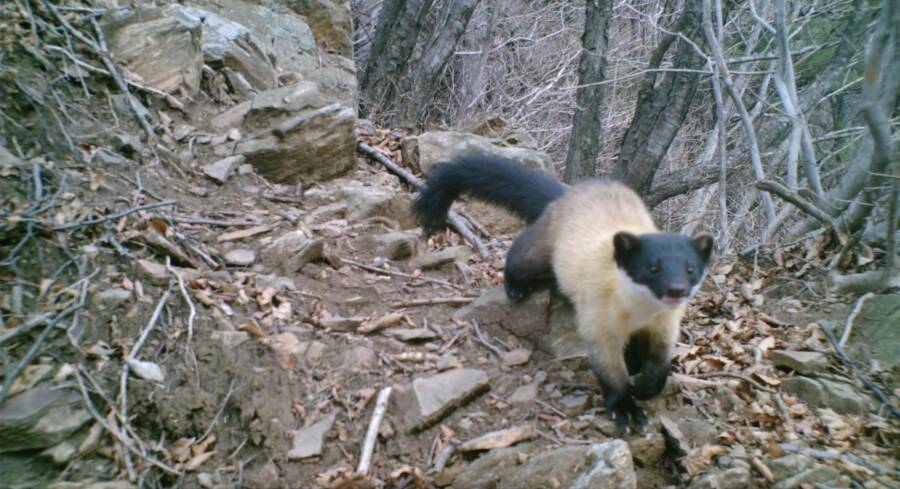
National Institute of Ecology / Google Arts & CultureMany of the new wildlife photos released by Google were taken by unmanned cameras. Here, a yellow-throated marten darts past a camera.
National Institute of Ecology / Google Arts & CultureMany of the new wildlife photos released by Google were remove by unmanned cameras . Here , a yellow - throated marten cat darts past a television camera .
But peace talks between the two res publica have since fall asunder . tenseness between North and South Korea have been especially high in recent calendar month , as North Korea engaged in a record book - high number of weapons presentment in 2022 , a movement preserve into this year .
In that way , the DMZ exemplify two opposing idea at once . On the one script , it symbolise the last and death of the Korean War , which continues to cast a large trace over North and South Korean societies today . But on the other , the DMZ present spirit and has allowed tons of rare species to thrive alfresco of humanity ’s reach .
“ The DMZ region constitute a sad history for the two Koreas , ” Kim Seung - ho , the head of DMZ Ecology Research Institute , notice . “ But it has been a rarefied haven for the many wildlife hold up there . ”
After reading about the wildlife that ’s thrived in the Korean DMZ , see what theseNorth Korean propaganda posterssay about Americans . Or , wait through these heartbreakingphotos from the Korean War .
