When you purchase through links on our site , we may realize an affiliate commission . Here ’s how it work .
What found art is heavily debated , and that ’s especially true for prehistoric art . But here are some of the contenders for the title of the cosmos ’s oldest artistry . Many were made by anatomically mod human being , but some were not .
Related : Did art exist before innovative human beings ? New uncovering raise big questions .

Rhino drawings from the Chauvet Cave
1. Mesolithic cave paintings
Mention prehistorical artistry , and most people remember of cave paintings like those inChauvet Cave near Avignon , France , or theLascaux Caves near Bordeaux . But these are relatively late and advanced examples of prehistorical art ; most of the painting in Chauvet Cave , for representative , were made by other modern humans between 28,000 and 37,000 years ago , while those in the Lascaux Caves are thought to have been created even more recently , around 17,000 years ago .
2. Mesolithic bone carvings
Europe is famous for its prehistoric art , and for a time , archaeologists suppose representational nontextual matter might have originated there . Sculptures made from animal bones , which are easier to chip at than rock and last longer than Sir Henry Wood , have turn up in France , Spain and Germany . This photograph shows the Venus of Brassempouy , which was discovered in France and date to about 25,000 age ago .
3. Venus figurines
The condition " Venus , " the Greek goddess of love life , is used for more than 200 prehistorical figurines of woman , usually cut up from soft endocarp or pearl , discover throughout Europe . Most date to the Gravettian menses of theHomo sapiensoccupation of Europe , between 26,000 and 21,000 years ago , but the oldest , discover in Germany , may be more than 35,000 eld sure-enough . This photograph shows the famous Venus of Willendorf from Austria , which wascarved in stone about 30,000 days ago .
4. Indonesian pig
The picture of a " warty squealer " in a rock and roll nontextual matter panel on the Indonesian island of Sulawesi is thought to be about 45,500 years old and may be theearliest " representational " art ever found . Researchers say that prehistoric Indonesia was a " hotspot " for rock’n’roll art and that early work like this challenge the idea that the tradition of rock art started in Europe and spread from there .
5. Neanderthal wall carvings
There are former representative of artwork crafted by former modern humans , and for a prospicient time , archeologist thought onlyHomo sapienswere capable of creating art . But recent discoveries suggest that Neanderthals , our closest human relatives , also created art . The carvings on a cave rampart in France weremade up to 75,000 years ago — many thousands of year beforeH. sapiensarrived in Europe .
6. Neanderthal bone carving
Neandertal man carved bone , too , and archaeologists think Neanderthals also likely carved Mrs. Henry Wood , which has not hold up . This carve toe bone of a giant cervid was found in a cave in Germany . archeologist think it was made by Neanderthals about 51,000 old age ago , long beforeH. sapiensarrived in the area . It ’s been hailed as one of theearliest symbolic carvingsever found , although what it symbolize is n’t acknowledge .
7. South African “hashtag”
This rock eccentric from Blombos Cave in South Africa was scar inred ochrewith crisscross lines equate to a modern " hashtag " symbol . It ’s thought to beabout 73,000 years old , and archaeologists think it was in all likelihood made by earlyH. sapiens .
8. Eagle talon pendants
These bird of Jove talons find in an ancient rock and roll shelter in Croatia were collected by Neanderthals , who may have fashion them into pendants 130,000 yr ago . The artifacts were unearthed a century ago , buttheir dandy agewas only recently realize .
9. Hominin wood
Wood is sluttish to carve , but it ordinarily rots when exposed to air and quickly perishes . So it ’s no wonder that many wooden objects make by Neanderthals and even early hominins have in all likelihood perished completely , which is why archaeologists have never constitute any . But the corpse of a 476,000 - year - oldwooden social structure find in Zambiawere preserve in Lucius Clay and show the skillful use of goods and services of wood that antediluvian hominins likely used to produce art .
10. Tibet handprints
Fossilizedchildren ’s handprints around a hot fountain in Tibetcould be 200,000 age old , concord to one subject , and they may represent some of the oldest art ever discover . The prints were made in travertine stone around the outpouring , which is soft when it ’s wet and hardens when it dries . But archaeologists debate whether such behavior comprise art andwhether the Tibet print are as erstwhile as claim .
11. Zigzag shell
These zigzag patterns on ashell found in Indonesiaare thought to have been made up to 540,000 years ago by the homininHomo erectus . The spirit behind the pattern is not clear , but archaeologists mention that similar patterns are still being made today .
12. Rock cupules
Prehistoric rock ‘n’ roll " cupule " have been found on almost every continent and were produced by many cultures over the ages . It ’s not known what , if anything , the carve pits or cups present , but archaeologists call up theearliest may be 1.7 million years old .
13. Stone spheroids
— Centuries - old proficiency reveals hidden ' 3D ' animals in Paleolithic cave art
— Mysterious rock music artistic creation painted by Aboriginal people portray Indonesian warships , bailiwick suggests
— 20,000 - year - quondam cave painting ' dots ' are the earliest pen words , study call . But not everyone agree .
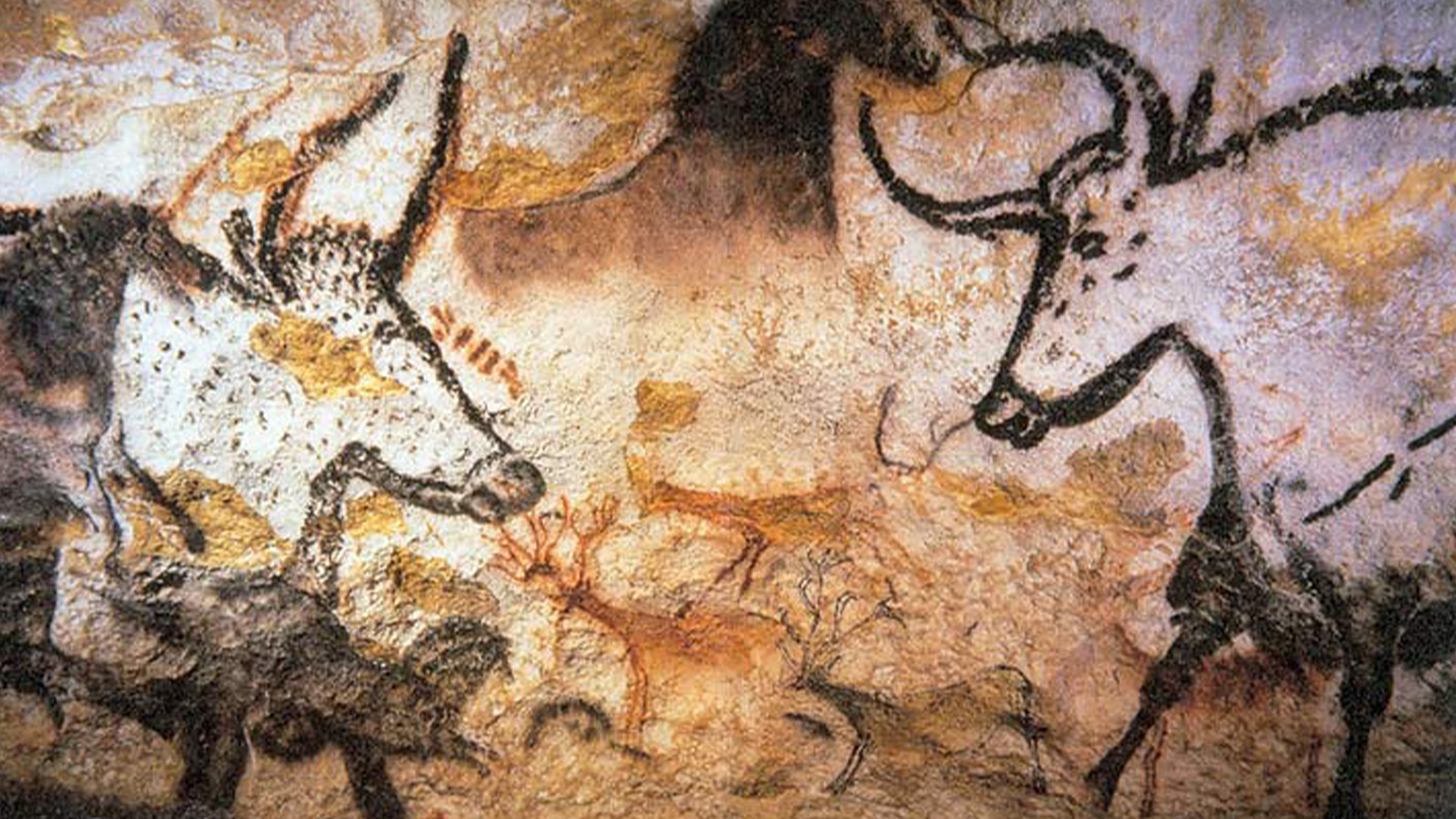
Aurochs, horses and deer painted on a cave.
Baseball - size " spheroids " made from soft rock have been found at toolmaking sites in Africa , Asia and Europe . The earliest are up to 2 million age quondam , but it ’s not know what their purpose was . A recent study analyzed the stone spheroids mathematically and propose they were attempts toimpose spheric " symmetry"on roughly round balls of rock . The researchers did n’t call these " art , " but they noted that someancient manus axes also show symmetry .

A front and side view of the Venus of Brassempouy, which was crafted around 25,000 years ago.

The prehistoric “Venus of Willendorf” figurine pictured at the Natural History Museum in Vienna, Austria. The oldest of such figurines may be 35,000 years old.

A digitally enhanced panorama of the warty pigs at Leang Tedongnge Cave, in Sulawesi, Indonesia.

Examples of engravings discovered in the Roche-Cotard cave (Indre et Loire - France). On the left, the “circular panel” (ogive-shaped tracings) and on the right the “wavy panel” (two contiguous tracings forming sinuous lines).

About 51,000 years ago, Neanderthals carved what look like chevrons on this giant deer toe.
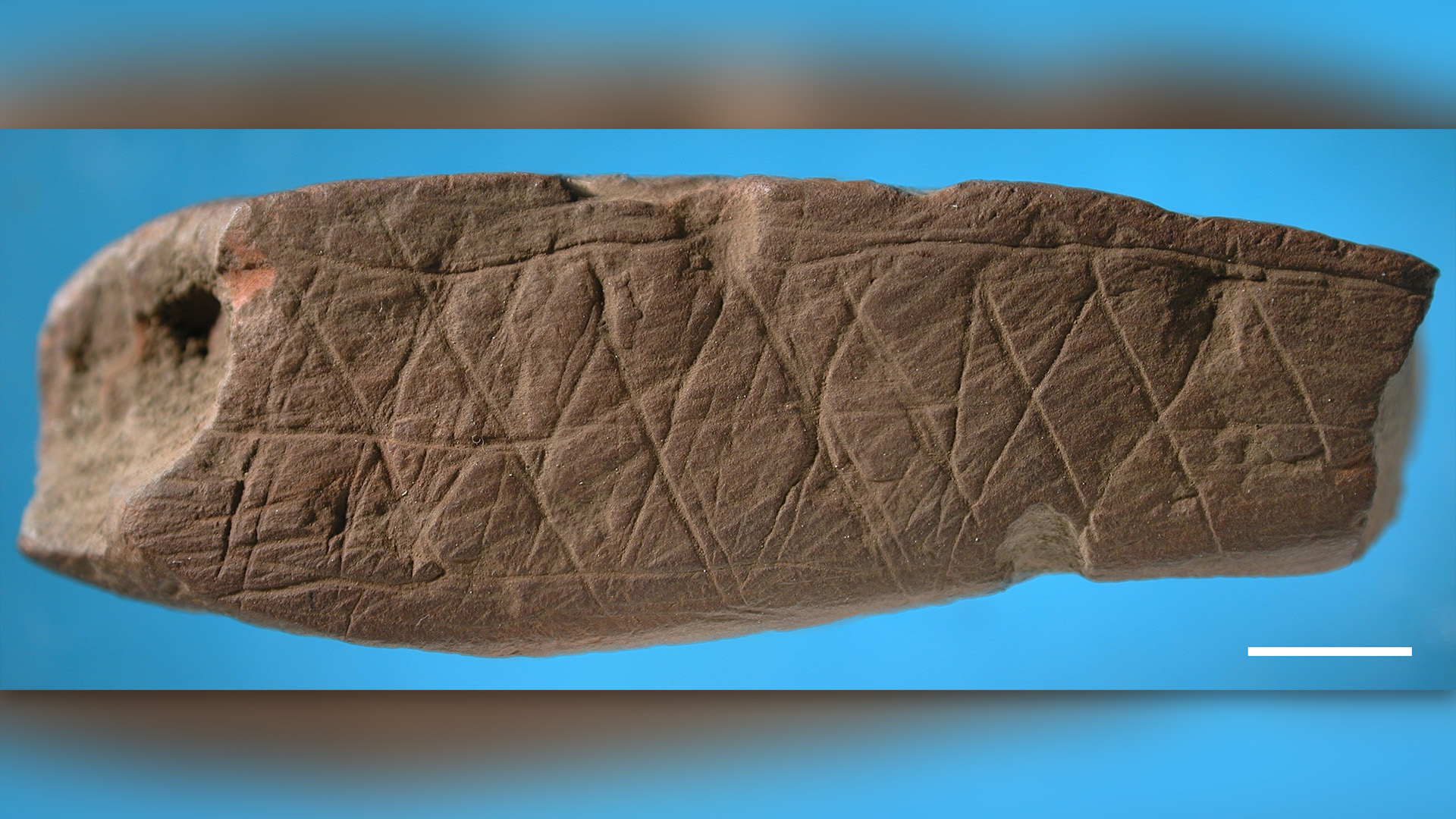
An abstract pattern engraved on a piece of ocher found at Blombos Cave.

White-tailed eagle talons from the Krapina Neandertal site in present-day Croatia, dating to approximately 130,000 years ago, may be part of a jewelry assemblage.

The wooden structure, showing where Stone Age Humans have cut into the wood.

3D rendering shows hand and footprints left by ancient hominin children.

TheHomo Erectusshell with geometric incisions, dated to circa 500,000 BP.

A number of cup mark rock carvings at Slagsta outside Stockholm, Sweden.

Some of the limestone spheroids from the ‘Ubeidiya archaeological site in northern Israel, which date back approximately 1.4 million years.


